
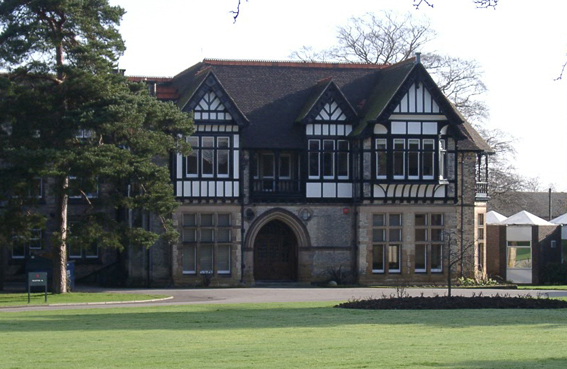
Domestic Revival Architecture
Recently I have been educating myself about design…and in particular the changes in design between the late 1800’s and the early 1900’s. My wife studied a degree in History of Design, so she has spent most of our time together trying to get me to understand the nuances of Gothic vs Arts and Crafts vs Art Nouveau.
So, then comes along Penraevon built by Chorley and Connon. Pevsner describe it as Domestic Revival, so that’s what it is. But before we go there, let’s look at the other styles of domestic architecture going on around the time it was built.
Firstly Gothic Revival – pointy arches and a bit spooky. The architecture of the Houses of Parliament and St Pancras Station. Here’s a domestic example. Very much based on grand cathedrals and monasteries.

…and then we have Queen Anne Revival – curvy like a chair, and a whiff of Dutch gables?

….which pre-dates Arts and Crafts – no pointy-ness in the windows, but lots of free flowing imagination, tall chimneys, portholes and steep roofs.

Which brings us back to Domestic Revival. Apparently Domestic Revival architecture is all about a time when young urban architects had a bit of time (and money) on their hands and were able to use the new railways and bicycles to go out out for jaunts in the countryside.
There they encountered old rustic hovels – thatched roofs, timber-frames, dove cotes, duck ponds…that sort of thing. So they came back and started to emulate this in their designs for domestic buildings. Like this building from 1878 in Leicester, now part of the De Montfort University by Henry Goddard. The point is that they were taking influence from domestic properties not grand palaces and cathedrals.

As it says here in a description of Goddard’s career:
‘Around this time there was a definite movement among younger architects away from the Victorian Gothic towards an eclectic pick and mix of styles influenced by the Renaissance and traditional English housing. There was a need for change and from 1875 ‘Queen Anne’ elements were introduced into some of Goddard and Paget’s buildings, and the Domestic Revival was exemplified by Goddard’s own house, Knighton Spinneys 1886.’

Knighton Spinneys – Henry Goddard 1886
Really interesting to see the features that this building has in common with Penraevon; Half-timbered, Oriel windows, Mullioned glass, Stone lintels and lots of porches, gables and rooflets. It takes a lot of influence from domestic Tudor buildings where they admired the truth in showing how the house was built.
For a more in depth read, check out this article on the styles in domestic architecture on VictorianWeb.


As custodian of Rowden Abbey I would be delighted if you care to look it up as a more typical example.
That is indeed a fine property – thank you for bringing it to my attention. Rowden Abbey
Is “domestic revival” a typically used term of generalization for the various revival styles occurring around the turn of the 20th c? hadn’t heard the term before.