
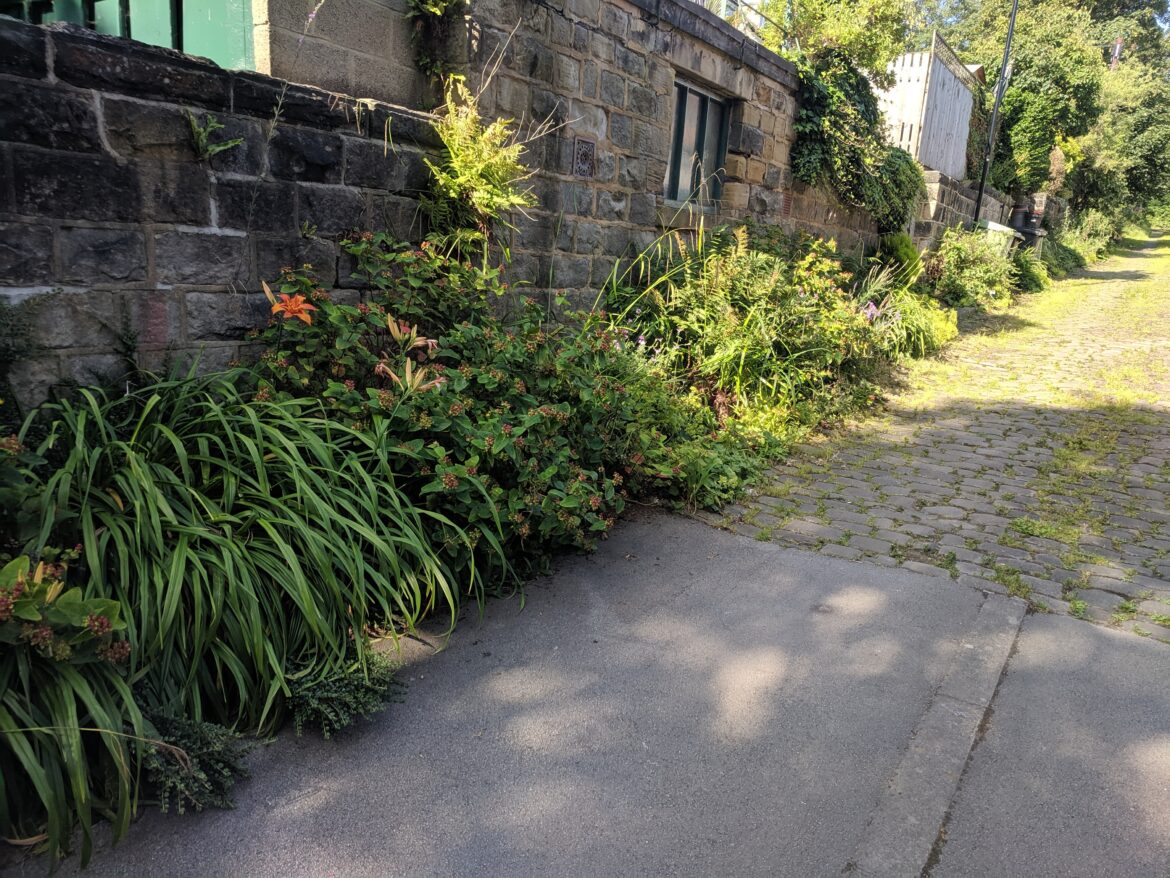
To understand Leeds, you have to slip sideways into it. Leeds is a city that reveals itself in fragments. You have to take the lanes, the ginnels and the little-known cut-throughs that have always shaped how the city moves and breathes. Once you know the cuthroughs, the shortcuts, and call them ginnels , then you feel like an insider.
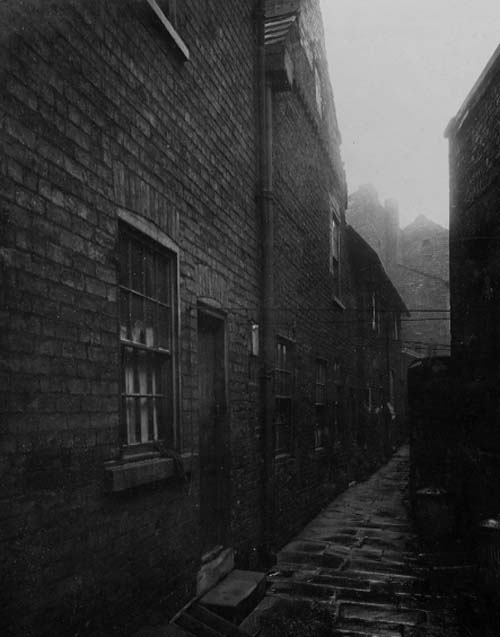
Back of Wharfe Street showing the ginnel in 1929
The people of leeds are called Loiners. Many people think this is a reference to Leeds being characterised by a centre of narrow lanes.
The “Loins” of Briggate: In the 19th century, central Leeds was characterised by narrow yards and alleyways (ginnels) leading off the main street, Briggate. These small passages were known locally as “low ins” or “loins”. People who worked or hung around these areas were nicknamed “Loiners”.
Corruption of “Lanes”: A similar, closely related theory suggests that “loiner” is a derivation of “laner,” referring to someone who lives or works in the lanes, which in the old Leeds dialect was pronounced as “loins”.
You might call these passageways snickets, twittens, entries or simply back lanes. Whatever the word, the meaning is the same an alleyway
Ginnels
Long before cars, these narrow routes were essential. They linked markets to yards, pubs to breweries, houses to workshops. They allowed people to move goods, gossip and themselves through a dense and working city. Leeds grew rich on wool, cloth, tailoring and trade, and its lanes were the threads that stitched it together.
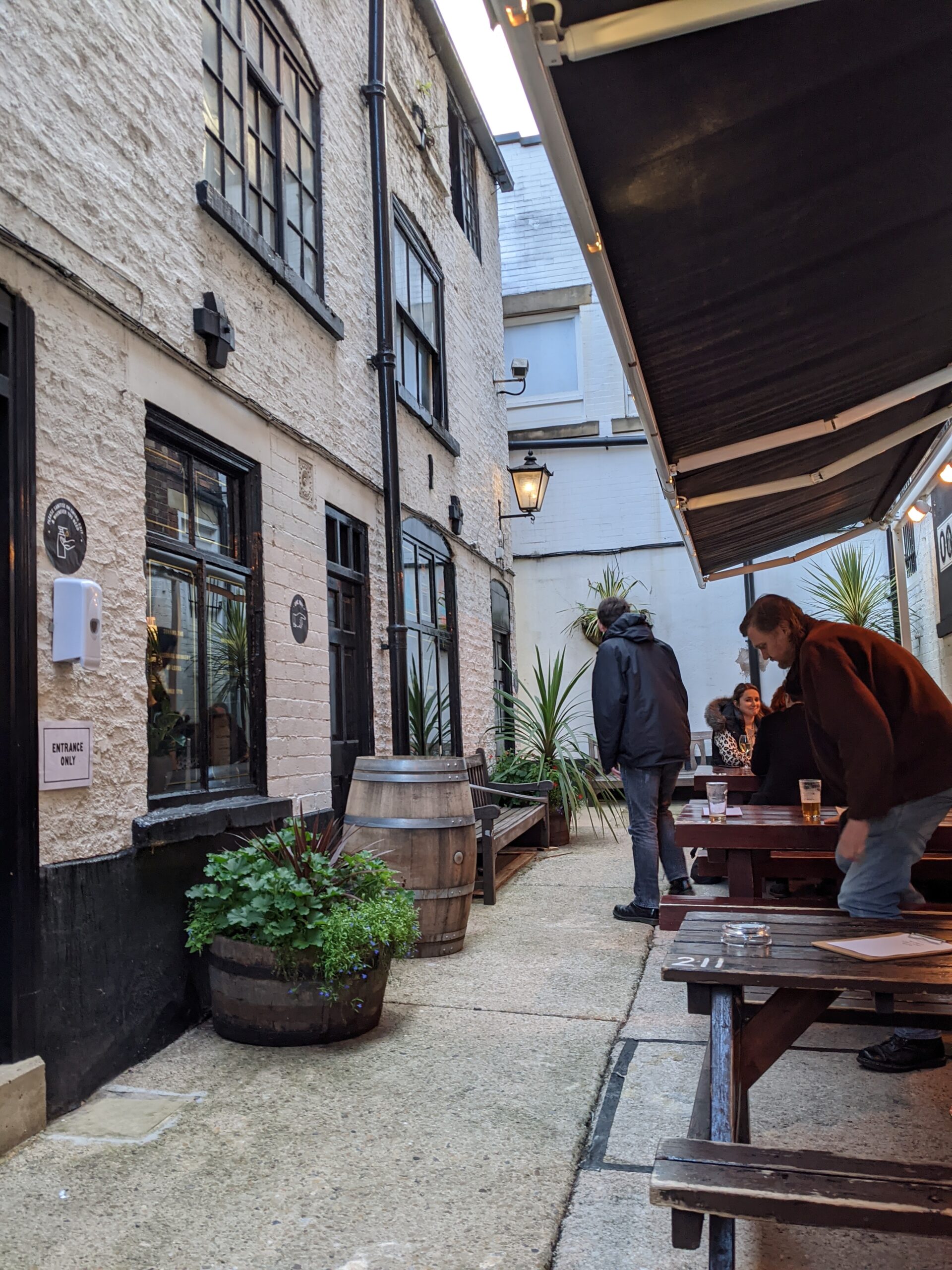
Turks head yard, still with a ginnel cutting through.
If you look at old photographs on Leodis, the remarkable online archive of Leeds history, you can see how busy these small spaces once were. The lanes were not marginal spaces. But they could be smelly with raw sewage running down the middle, many have since been destroyed or built over as they were seen as unsintary.
Take Briggate, now a wide and busy shopping street. Step just to one side and you find yourself in a different world. Whitelock’s Ale House sits quietly in Turk’s Head Yard, one of the oldest pubs in the city. For centuries it has served people who slipped in from the street for a drink, a meeting, a moment of rest. Pubs like this were often tucked into yards and lanes because that was where people passed through. These were places of pause as well as movement.
Many of Leeds’ best-loved pubs still sit in these narrow spaces. A lane creates a different kind of social space. It slows you down, it speeds you up a quick cut through. It brings you closer to other people. It takes you away from traffic and makes a city feel human.
Over time, many of these spaces fell into neglect. As cars took over the streets and planning priorities shifted, small passages were seen as inconvenient or unsafe, and unclean. Some were closed off. Others became forgotten corners, places you hurried through rather than lingered in.

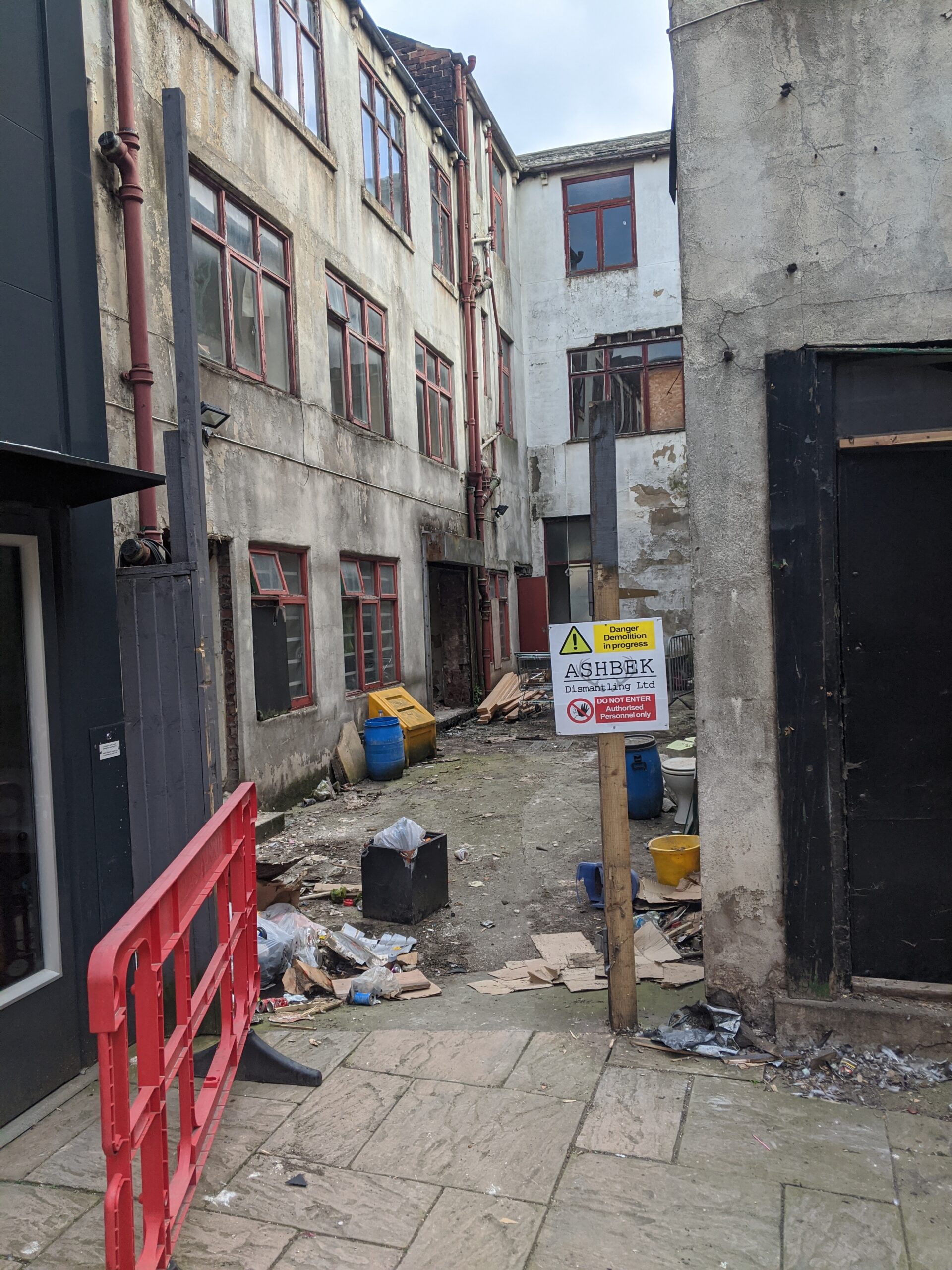
Yet something quietly interesting is happening now. Across Leeds, and in cities everywhere, these small spaces are being rediscovered. What was once overlooked is being reimagined. The Empire Cafe opened in one, and as this article states it is bringing life back to a ginnel.
The historic cafe down a Leeds ginnel – and the chef bringing it back to life – The Hoot Leeds 2023
Not Just The City
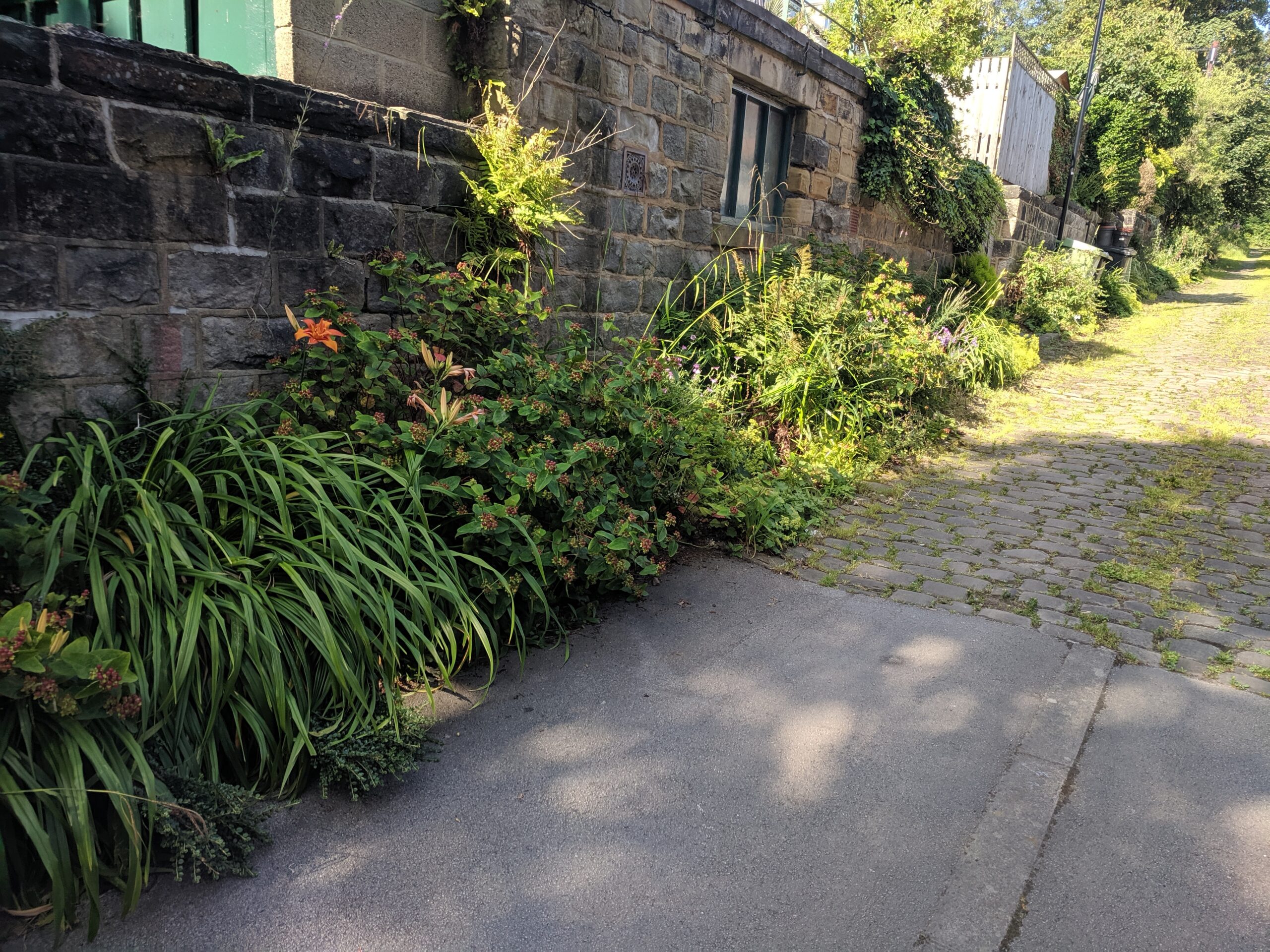
In the suburbs ginnels and lanes can offer rare strips of soil, shade and shelter. Plants take root where they can. Ivy climbs old brick. Buddleia appears in cracks. These narrow routes become unexpected wildlife corridors, allowing birds, insects and small animals to move through urban areas. They are tiny but important threads of green, connecting gardens, parks and hidden patches of growth. A hedgehog highway.
Part of it is social. Communities are beginning to claim these spaces back. A ginnel does not have to be dark and ignored. It can be planted, cleaned, lit and made welcoming. In Leeds and beyond, residents have started to turn back alleys into small gardens, to paint walls, to add benches and pots. What was once a shortcut becomes a place.
There is something fitting about this, lanes have always belonged to people rather than to traffic. They were made by feet. To reclaim them as spaces of beauty and shared care feels like a return to their original purpose.
Walking through a ginnel today, you might notice a row of pots outside a back door, or a climbing rose trained along a wall. You can hear birds where normally you hear traffic. You might find a small community noticeboard or a bench. These gestures show that the people here care. They say that even the smallest spaces deserve attention.
In a time when cities can feel overwhelming, these narrow routes offer a different rhythm. They are slower. More intimate. They invite you to look closely. They remind you that a city is not only its big buildings and busy roads, but also the quiet passages between them. New developments in the city are taking thinking into their designs (Will update on the Eastgate development once it is signed off but it proposes to use green spaces and paths of wildlife to link together)
To walk through Leeds by its lanes is to experience the city as it really is. Layered. Lived in. Some of these ginnels are thought to be a 1000 years old, older than the city itself. Shaped by countless journeys, past and present. From the yards that once served merchants and publicans to the green corridors now being coaxed into life, these small spaces tell a story of continuity.
Wildlife Corridors
Even in urban environments nature can be welcomed in. Hedgehogs, red kites, foxes, are all common users of the wildlife corridors of Leeds.
They have always been places of connection. The key to success is making them feel safe and a retreat rather than dangerous and isolated.
You just have to step into them to see it.
Three Great Ginnel Trails To Experience In Leeds
The Ginnel pubs of Briggate.
Briggate has a number of secret yards branching off, you would never notice them and connecting them to the next street are ginnels. These yards used to house businesses (plumbers, tailors, and jewellers) and pubs, now only the pubs remain.
- Next to the an entrance to the Trinity you will find a back ginnel leading to the first of our pub tour (here is the google link ), Turks Head and further down the ginnel Whitelocks.
- Leave at the bottom and you will find yourelf on Briggate turn left and you can sneak up the next lane the Pack horse,
- Then next along travelling up briggate is opposite Harvey Nichols is a sam smith stalwart The Angel which feels like you are entering a pub from Dickens – do remeber no photographs, swearing and cash only (Sam Smith pubs are a bizarre thing all of there own).
- Then a tiny little favourite The ship.
- Finally not so much a ginnel more a lane which has been widened is the White swan ( This was always the pub for the City Varities a beautiful Music Hall theatre.
- Four pubs on one street, tucked up ginnels and all still busy.


The great ginnel in Headingley
Chapel Allerton /Potternewton /Chapeltown – Buslingthorpe Way Ginnel
This links the centre of Chapel Allerton walking all the way down until joining the bottom of sheepscar. There are art installations and community gardens along the way and it is a great way to walk, avoiding all the traffic of Chapeltown and Harrogate Road. The Ginnel.


